Responsible Consumption and Production
As one of the United Nations Sustainable Development Goals, SDG 12 aims to ensure sustainable consumption and production patterns.
This goal emphasises the need to decouple economic growth from environmental degradation by promoting the responsible use of resources, reducing waste, and fostering a culture of sustainability. Universities play a central role in advancing research, education, and institutional practices that encourage responsible consumption and sustainable production across society.
Guided by this global vision, Hokkaido University promotes sustainable consumption and production through research, education, and campus operations.
The University implements comprehensive waste reduction and recycling programmes, sustainable procurement policies, and awareness initiatives that engage students, faculty, and staff in minimising environmental impact. By integrating sustainability into everyday campus life, from purchasing and resource management to education and outreach, Hokkaido University fosters a culture of responsibility that supports both environmental conservation and long-term social well-being.
Operational Measures
12.2.1: Ethical sourcing policy
Overview (2024)
Hokkaido University is dedicated to promoting responsible consumption and production through a comprehensive ethical sourcing policy for food and supplies. By prioritising sustainability, fairness, and environmental stewardship, the university ensures that its procurement practices align with global standards for ethical sourcing. These efforts foster a culture of transparency and accountability, supporting both local communities and the broader goal of sustainable development. This ethical food sourcing policy underscores the university’s commitment to sustainable practices.
Key Initiatives
-
The university has established clear guidelines for the ethical sourcing of food and supplies, with a strong emphasis on environmentally conscious procurement. This includes compliance with national laws on green purchasing and the adoption of sustainable proposal methods in contracts. In its policy for fiscal year 2023 (2023.4.1-2024.3.31), the university specifies that for food items procured in campus cafeterias, the procurement target is 100%. Unless hindered by operational difficulties or supply constraints, the university aims to procure according to “Standard 1.”
-
Hokkaido University actively promotes ethical food sourcing by prioritising the use of local Hokkaido products and leveraging university-produced resources. These efforts emphasise sustainability and integrity as guiding principles for procurement.
-
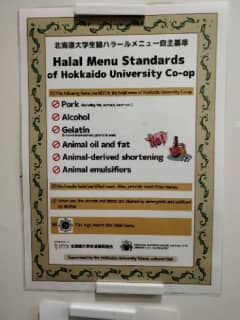
The university collaborates with the Hokkaido University CO-OP to provide halal-friendly food in campus cafeterias. It has established its own standards and clearly indicates halal menu items with a logo mark. This practice respects religious and cultural diversity while advancing inclusive and ethical food sourcing on campus.
-
Hokkaido University also promotes procurement from facilities employing people with disabilities and from small and medium-sized enterprises, contributing to social inclusion and equitable economic opportunities.
Impact
Through these initiatives, Hokkaido University has strengthened its commitment to the ethical sourcing of both food and supplies, setting a benchmark for responsible consumption and production within higher education. The university’s policies and practices reduce environmental burdens, support the regional economy, promote social inclusion, and ensure procurement transparency. By embedding ethical sourcing policies and guidelines for both food and supplies into its operations, Hokkaido University demonstrates leadership in advancing sustainable and responsible practices on campus and beyond.
12.2.3: Policy waste disposal - hazardous materials
Overview (2024)
Hokkaido University is dedicated to responsible consumption and production through comprehensive policies, processes, and practices for hazardous materials waste disposal. The university ensures strict compliance with environmental regulations and promotes a safe, sustainable campus by managing hazardous waste with transparency and accountability. These efforts are rooted in minimising environmental impact, protecting human health, and fostering a culture of environmental responsibility among students, faculty, and staff.
Key Initiatives
-
Hokkaido University outlines clear policies and initiatives in its Sustainability Report regarding the proper treatment of hazardous waste, ensuring safe management and disposal in compliance with relevant laws. Based on the Hokkaido University Chemical Substance Management Regulations, the university carries out emission reduction, education, centralised system management, waste liquid collection and external treatment, and reporting under the PRTR Law, along with confirmation of proper processing.
-
Regular training sessions and e-learning programmes on chemical substance handling are provided to all relevant personnel. The university also conducts periodic surveys and audits to monitor compliance and improve waste management practices.
-
Hokkaido University implements detailed waste segregation rules for hazardous waste, ensuring that materials are sorted and processed appropriately. Resource waste is solidified at high temperature and pressure to be recycled as solid fuel, supporting the university’s commitment to resource circulation.
Impact
Through these robust policies and initiatives, Hokkaido University has established a safe and sustainable environment for its community. The university’s policy and process for hazardous materials waste disposal ensure compliance with environmental laws and reduce risks associated with hazardous waste. By providing ongoing education and clear guidelines, the university empowers its members to actively participate in responsible waste management. These efforts contribute to the broader goal of responsible consumption and production, positioning Hokkaido University as a leader in campus sustainability and environmental stewardship.
12.2.4: Policy waste disposal - landfill policy
Overview (2024)
Hokkaido University is committed to promoting responsible consumption and production through a comprehensive waste management policy. The University systematically measures the amount of waste generated and recycled, ensures the thorough circulation of resources, and minimises environmental impact. By implementing waste management practices and advancing the “3R” principles of Reduce, Reuse, and Recycle, the University fosters a sustainable campus environment and serves as a model of institutional sustainability.
Key Initiatives
-
Waste Disposal Policy and Environmental Impact Reduction at Hokkaido University
Based on the Hokkaido University Environmental Policy and Action Plan, the university rigorously implements waste management and, as declared in the Sustainability Declaration (2024), aims to reduce environmental impact through waste reduction. Guided by these policies, and under the theme of “a resource-circulating society that all university members can participate in,” the university promotes Reduce, Reuse, and Recycle. Specific rules for sorting general and experimental waste are established to ensure proper treatment. In addition, the university measures waste emissions and pursues continuous improvement toward reduction.
-
At Hokkaido University, waste classification and collection methods are standardised across the entire campus. This initiative ensures that waste is properly separated at the source, thereby promoting efficient recycling.
-
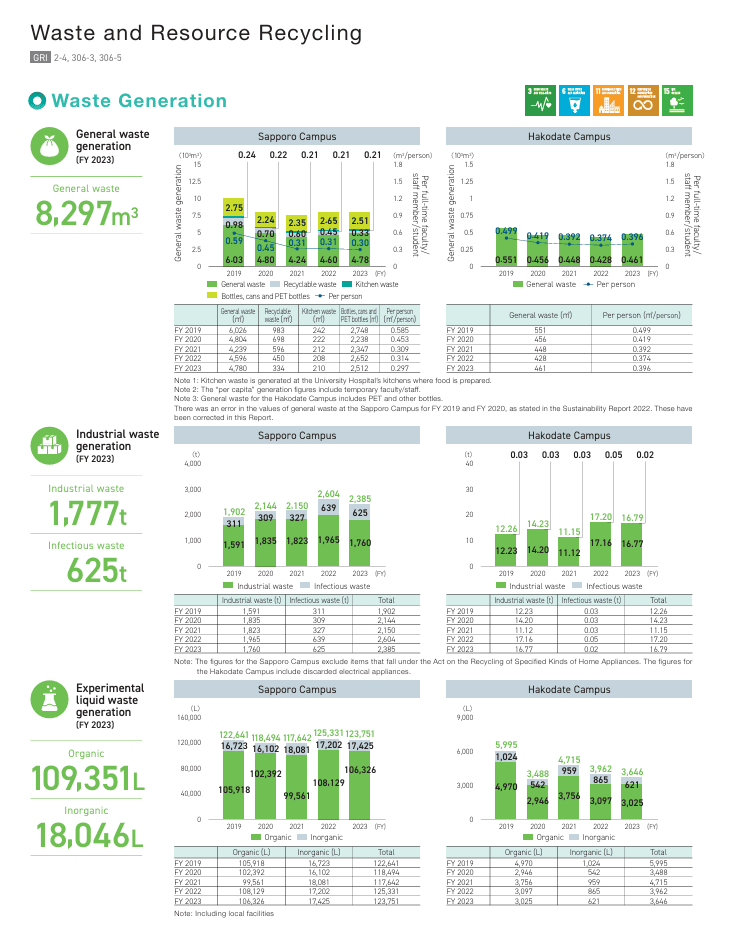
The university regularly conducts waste composition analyses and publishes detailed material balance reports. These reports include data on the output of combustible waste, recycled paper, and resource waste such as bottles, cans, and PET bottles. The flow of recyclable materials is tracked, supporting transparency and continuous improvement in waste management.
-
The University, in collaboration with the campus CO-OP, collects and recycles wastepaper such as documents, newspapers, magazines, and cardboard. Recyclable waste is processed into solid fuel through high-temperature and high-pressure treatment, further promoting recycling.
-
By introducing waste compression technologies, the university has successfully reduced both waste disposal costs and emissions. This initiative enhances the efficiency of waste management and contributes to the university’s sustainability goals.
Impact
Through these initiatives, Hokkaido University has significantly enhanced its capacity to measure and manage waste flows, achieving an increase in recycling rates. The integration of the 3R principles—Reduce, Reuse, and Recycle—and the adoption of advanced waste treatment technologies have fostered a culture of responsible consumption and production within the campus community. By ensuring transparent reporting and pursuing continuous improvement in waste management, the University demonstrates leadership in sustainable practices and environmental stewardship.
12.2.5: Policy for minimisation of plastic use
Overview (2024)
Hokkaido University is dedicated to promoting responsible consumption and production by implementing comprehensive policies and actions to minimise plastic use across campus. Through institutional guidelines, sustainability declarations, and community engagement, the university strives to reduce plastic waste, encourage resource circulation, and foster a culture of sustainability. These efforts are aligned with the university’s broader commitment to minimising environmental impact and advancing a sustainable society.
Key Initiatives
-
The university has issued a Sustainability Declaration (2024) that explicitly mentions the reduction of plastic use as a university-wide priority. This declaration underpins institutional efforts to promote responsible consumption, setting a clear policy framework for plastic use minimisation and sustainable campus operations.
-
The university has established an environmental policy that emphasises resource circulation and the minimisation of plastic use. This policy guides procurement practices and campus operations, ensuring that environmentally friendly products are selected and waste is reduced.
-
The university’s action plan outlines the 3Rs—Reduce, Reuse, Recycle—as core strategies for waste management. This plan includes specific measures to decrease plastic consumption and promote sustainable behaviours among students and staff.
-
In collaboration with the Hokkaido University CO-OP, campus stores and dining facilities have introduced a paid system for plastic bags. This initiative has significantly increased the rate at which customers decline plastic bags, contributing to a substantial reduction in plastic waste.
-
To further reduce single-use plastics, dining facilities have adopted reusable containers for takeout meals. A collection system for these containers has been implemented, enabling their reuse and supporting resource circulation on campus.
-
The university has set procurement guidelines that encourage the purchase of goods with minimal environmental impact, including alternatives to plastic products.
Impact
These initiatives have led to a dramatic decrease in plastic usage on campus. The introduction of paid plastic bags has resulted in a plastic bag refusal rate of approximately 96–97%, reducing annual plastic bag consumption by about 98% compared to previous years and cutting CO₂ emissions by nearly 54.9 tons. The adoption of reusable takeout containers has further contributed to resource circulation, with around 40% of containers being collected and reused. Through these actions and its clear commitment to minimising plastic use, Hokkaido University exemplifies leadership in responsible consumption and production. Its policy on plastic use continues to drive progress toward a more sustainable and environmentally conscious campus community.
12.2.6: Policy for minimisation of disposable items
Overview (2024)
Hokkaido University promotes responsible consumption and production by reducing disposable item use across campus. Institutional guidelines, procurement strategies, and operational initiatives minimise environmental impact and encourage sustainable practices. These initiatives engage the university community in reducing waste and adopting sustainable alternatives.
Key Initiatives
-
The university emphasised reducing consumables and adopting environmentally preferable alternatives under its Policy for the Promotion of Procurement of Environmentally Friendly Goods (FY2023: April 1, 2023–March 31, 2024). This policy applied to all departments and suppressed the use of disposable products while promoting reusable or lower-impact items. The policy is formulated and published annually, ensuring transparency and continuous improvement in environmentally friendly product selection.
-
Hokkaido University advances waste reduction, reuse, and recycling through action plans. These principles are integrated into daily operations and university-wide activities.
-
Through office digital transformation (DX), the university promotes reusing office consumables and adopting e-books, reducing reliance on disposable paper and other consumables.
-
The university operates an Equipment Market System to promote reuse of research equipment, OA devices, and electrical appliances. Items meeting specific conditions can be listed, approved, and transferred, matching supply and demand within the university. This reduces unnecessary disposal and new purchases, enabling effective resource use and waste reduction.
-
The university cooperative introduced a paid plastic bag system in cafeterias, shops, and bookstores. This discourages single-use bag consumption and fosters the habit of carrying reusable bags.
Impact
These initiatives strengthened the university’s efforts to minimise disposable items. Policies and daily operations foster a sustainable campus environment. Green procurement (covered under the annual policy), promotion of the 3Rs, office DX, reuse of research equipment, and the paid plastic bag system reduced waste and resource use, while raising awareness among students, faculty, and staff. Together, these initiatives highlight the university’s leadership in responsible consumption and production.
12.2.7: Disposable policy: extensions to services
Overview (2024)
Hokkaido University is dedicated to promoting responsible consumption and production by ensuring that its disposable policies and environmental standards extend beyond campus operations to include outsourced services and the supply chain. Through comprehensive procurement guidelines and compliance frameworks, the university actively encourages its partners and suppliers to adopt green procurement practices and environmentally conscious operations. These efforts are designed to minimise environmental impact, foster ethical practices, and support sustainable development across all levels of university-related activities.
Key Initiatives
-
Hokkaido University has established a robust policy for the procurement of environmentally friendly goods and services, in accordance with the Green Procurement Act. This policy is updated and published annually, and it explicitly requires suppliers, service providers, and contractors to align with the university’s green procurement standards. The university also encourages the use of vehicles specified in the procurement policy for the delivery of goods.
-
Hokkaido University enforces strict compliance with laws, university regulations, and ethical standards, extending these requirements to workers of partner businesses. The university’s whistleblower protection and compliance regulations ensure that any violations, including those by outsourced service providers and supply chain partners, can be reported and addressed appropriately.
-
The university’s sustainability reports describe the proper disposal of hazardous waste, including procedures for outsourced waste management. These reports demonstrate ongoing efforts to ensure that all external contractors adhere to the university’s environmental compliance standards.
Impact
By extending its disposable policies and environmental standards to outsourced services and the supply chain, Hokkaido University has significantly strengthened its commitment to responsible consumption and production. These initiatives have led to greater adoption of green procurement practices among suppliers and service providers, enhanced transparency and accountability, and improved environmental performance across all university-related activities. The integration of compliance frameworks and whistleblower protections further ensures ethical conduct and continuous improvement, reinforcing the university’s leadership in sustainable operations.
12.2.8: Minimisation policies extended to suppliers
Overview (2024)
Hokkaido University is dedicated to promoting responsible consumption and production through comprehensive sustainable procurement practices. The university ensures that minimisation policies are implemented internally and extended to outsourced suppliers and the broader supply chain. By aligning procurement activities with national environmental standards and encouraging suppliers to adopt green purchasing and waste-reduction practices, Hokkaido University demonstrates leadership in advancing sustainability across all operational levels.
Key Initiatives
-
Hokkaido University has established a policy based on the national "Act on the Promotion of Procurement of Eco-Friendly Goods and Services by the State and Other Entities" (Green Purchasing Law). This policy guides the university’s procurement activities, prioritising goods and services with minimal environmental impact.
-
The university actively encourages suppliers, service providers, and contractors to promote green procurement in accordance with the university’s procurement policy. Suppliers are requested to align their own procurement practices with the university’s standards, particularly when delivering goods and services to the campus.
-
The “Hokkaido University Detailed Rules for Handling Construction Contract Work and Related Contracts” (revised in 2024 and 2025) stipulates the use of environmentally conscious proposal methods and procedures for designer selection. These rules define concrete provisions to embed sustainability into the entire procurement process.
-
Hokkaido University’s compliance regulations extend to suppliers and contractors, ensuring adherence to laws, university rules, and ethical standards. The regulations include mechanisms for whistleblowing and protection of whistleblowers, covering not only university staff but also workers of business partners.
Impact
Through these initiatives, Hokkaido University has successfully integrated sustainable procurement and minimisation practices into its supply chain. The university’s approach ensures that environmental considerations are a core component of all procurement decisions, influencing suppliers and contractors to adopt similar standards. By fostering a culture of responsible consumption and production, Hokkaido University contributes to the reduction of environmental impact both within the institution and throughout its supply chain. These efforts exemplify the university’s commitment to sustainability and its role as a model for responsible procurement in higher education.
Waste Recycled
12.3.1: Waste Tracking
Hokkaido University systematically measures the amount of waste generated and recycled across its campuses.
Publication of a Sustainability Report
12.4.1: Publication of a sustainability report
Hokkaido University Sustainability Report
Hokkaido University publishes an annual Sustainability Report, which has been released every year since 2020. The report builds upon the framework of the university’s Environmental Report, which the institution has published since 2005 in accordance with the “Act on the Promotion of Business Activities with Environmental Consideration by Specified Corporations” (Environmental Consideration Promotion Act).
While the Environmental Report was primarily focused on legal requirements such as environmental policies, goals, and measures to reduce environmental impacts, the Sustainability Report goes further. It integrates not only environmental data and initiatives, but also articles highlighting the university’s history, culture, student-led projects, and broader contributions to society from a sustainability perspective.
Since the Sustainability Report 2022, Hokkaido University has aligned its reporting with the GRI Standards, an internationally recognised framework for sustainability reporting. Reports are structured to address the three dimensions of impact—economic, environmental, and social—and explicitly map initiatives to the United Nations Sustainable Development Goals (SDGs). In parallel, environmental data are disclosed with reference to the Environmental Reporting Guidelines 2018 (Japan).
The most recent Sustainability Report 2025 is a publicly available standalone document, accessible via the university’s official sustainability website. Through continuous annual publication since 2020, Hokkaido University demonstrates transparency and accountability in advancing sustainability, in direct alignment with UN SDG Target 12.6.