Climate Action
As one of the United Nations Sustainable Development Goals, SDG 13 calls for urgent action to combat climate change and its impacts.
This goal emphasises the shared global responsibility to mitigate greenhouse gas emissions, strengthen climate resilience, and promote education and awareness about climate action. Universities are key drivers of change through their research, partnerships, and sustainable operations that reduce environmental impact and advance climate solutions.
Guided by this global goal, Hokkaido University promotes climate action through research, education, and institutional practice.
The University conducts interdisciplinary research on climate science, adaptation, and decarbonisation technologies, while fostering collaboration with governments, industry, and local communities to address regional and global challenges. Through campus-wide initiatives such as reducing carbon emissions, improving energy efficiency, and advancing sustainability education, Hokkaido University is working toward the realisation of a resilient and low-carbon future.
Low-carbon Energy Tracking
13.2.1: Low carbon energy tracking
Overview (2024)
Hokkaido University is dedicated to advancing climate action through comprehensive low-carbon energy tracking and the implementation of renewable energy solutions across its campus. By systematically measuring the amount of low-carbon energy used and promoting the adoption of sustainable energy sources, the university demonstrates its commitment to reducing its carbon footprint and fostering a culture of environmental responsibility. These efforts are integral to the university’s broader sustainability strategy, ensuring that the university monitors and manages energy consumption in alignment with global climate goals.
Key Initiatives
-
The university conducts measurements of low-carbon energy used across the entire campus. This systematic approach enables accurate low-carbon energy tracking and supports data-driven decision-making for sustainability planning.
-
Hokkaido University has installed solar power generation systems on campus and regularly measures the amount of renewable energy produced. This initiative not only contributes to the university’s energy needs but also serves as a model for integrating renewable energy into institutional operations.
-
The university publishes detailed sustainability reports that include data on energy consumption and the proportion of renewable energy utilised. These reports provide transparency and accountability, highlighting progress in the adoption of low-carbon energy and informing the campus community and stakeholders.
Impact
Through these initiatives, Hokkaido University has established a framework for measuring the amount of low-carbon energy used and tracking progress toward climate action targets. The integration of solar power and the commitment to campus-wide low-carbon energy tracking have helped reduce the university’s reliance on conventional energy sources. By sharing results through sustainability reports, the university fosters awareness and engagement among students, staff, and the broader community. These efforts exemplify Hokkaido University’s initiatives in promoting low-carbon energy solutions and advancing climate action within higher education.
Environmental Education Measures
13.3.1: Local education programmes on climate
Overview (2024)
Hokkaido University is dedicated to advancing climate action through comprehensive local education programmes and outreach campaigns. By engaging communities, students, and professionals, the university promotes awareness of climate change risks, impacts, mitigation, adaptation, and early warning systems. These efforts are designed to empower individuals and organisations to take meaningful action in reducing environmental burdens and building resilience against climate-related challenges. Through a diverse range of educational opportunities and local campaigns on climate change risks, Hokkaido University promotes a culture of sustainability and proactive climate action across local and national communities.
Key Initiatives
-
Open Lectures on Climate Change and Disaster Risk Reduction
The university regularly offers public lectures and seminars on topics such as climate change science, disaster preparedness, and the relationship between human activities and environmental impacts. These sessions are open to the public and provide foundational knowledge on climate change risks and adaptation strategies.
-
Hokkaido University operates a dedicated website titled “Understanding the Impact of Climate Change,” which disseminates information to local communities and the general public on climate change risks, impacts, mitigation, adaptation, and impact reduction. The site highlights research findings from diverse fields such as forests, ice sheets, atmosphere, oceans, and society to promote public understanding and inspire action on climate change.
-
The Center for Natural Hazard and Disaster Recovery (CNHR) dispatches lecturers throughout the year to deliver training and educational sessions on disaster preparedness. Covering topics such as volcanic disasters, earthquakes, tsunamis, landslides, and climate change–related risks like snowfall variability and health impacts, these programmes raise awareness among communities, governments, and professionals about adaptation measures and the importance of early warning systems.
-
The Balanced Ocean Operation Division (LASBOS) provides free online educational content covering climate change and its impacts on marine and polar environments. These resources are accessible globally, supporting local education programmes on climate action.
-
Through field-based programmes and collaborative workshops with high schools and community organisations, participants gain hands-on experience in observing environmental changes, understanding climate impacts, and applying early warning systems.
-
Specialised programmes, such as courses on global warming impacts, cultivate skills in field research, diversity acceptance, innovation, and problem-solving. These curricula are designed to develop leaders capable of promoting actions to mitigate climate change risks.
Impact
These educational and outreach initiatives have significantly strengthened community understanding and engagement with climate change issues. By providing both free and accessible learning opportunities, Hokkaido University ensures broad participation in local education programmes on climate action. The integration of advanced scientific knowledge, practical field experiences, and community-based disaster education has encouraged individuals to take proactive steps toward mitigating climate change risks. International collaborations and public forums further extend the university’s impact, contributing to the promotion of actions to mitigate climate change risks and the development of early warning outreach programmes. Collectively, these efforts demonstrate Hokkaido University’s leadership in fostering a resilient and sustainable society through education and community engagement.
13.3.2: Climate Action Plan, shared
Overview (2024)
Hokkaido University advances climate action through strong collaboration with local governments and community groups. By collaborating with local communities and local governments on climate action planning, the university plays a central role in enhancing regional climate resilience and sustainability. These efforts ensure that mitigation and adaptation strategies are grounded in scientific expertise while responding to local needs. Through advisory roles, joint planning, and public engagement, the university fosters a culture of shared responsibility and innovation in addressing climate change.
Key Initiatives
-
The Hokkaido University Center for Natural Hazards Research (CNHR) provides expert advice as a committee member, contributing to the formulation of climate change mitigation and adaptation measures.
-
Hokkaido University’s joint proposal with the City of Sapporo was selected by the Ministry of the Environment as a “Decarbonisation Leading Area.” In collaboration with the City of Sapporo, HOKKAIDO GAS CO., LTD., Hokkaido Heat Supply Corporation, Hokkaido Electric Power Co., Inc., and Northern Advancement Center for Science & Technology, the University is promoting initiatives to realise the zero-carbon city “Environmental Capital SAPP‿RO.” As part of this effort, the University has developed a Climate Action Plan shared with the local community, which includes campus-wide decarbonisation of the North Campus. Specific measures involve establishing a carbon-free energy system with BCP functions at Research Building No. 6, transitioning to LED lighting and renewable electricity, and introducing EV campus shuttle buses.
-
The Hokkaido University Institute for the Advancement of Sustainability coordinates sustainability under the leadership of the Executive Vice President. Three integrated divisions—the Campus Management Division, SDGs Promotion Division, and Carbon Neutral Promotion Division—work together to advance climate action across education, research, campus operations, and partnerships with governments, citizens, and industries.
Impact
Through these initiatives, Hokkaido University has significantly strengthened regional climate action. The university’s involvement ensures that climate strategies are scientifically sound, locally relevant, and widely shared. This collaborative approach has led to the adoption of innovative adaptation and mitigation measures, raised public awareness, and promoted the integration of ecosystem-based solutions into regional planning. The university’s leadership exemplifies the power of academic–community partnerships in driving effective climate action.
13.3.3: Co-operative planning for climate change disasters
Overview (2024)
Hokkaido University is dedicated to advancing collaborative planning for climate change disasters by actively working with government agencies and local communities. Through a range of partnerships and research initiatives, the university contributes to the development of resilient strategies that address the increasing risks posed by climate change. By participating in both local and national planning efforts, Hokkaido University supports the creation of robust frameworks for disaster preparedness, response, and adaptation, ensuring the safety and sustainability of communities in Hokkaido and beyond.
Key Initiatives
-
The Center for Natural Hazards Research (CNHR) at Hokkaido University promotes cross-disciplinary studies on disaster prediction, risk reduction, and monitoring in response to compound disasters triggered by climate change and ground deformation. The center also provides recurrent education for graduate students, government officials, and private-sector engineers, while nurturing community leaders. Additionally, it develops practical tools such as the “Guidelines for Widespread Natural Disaster Reduction” for municipal crisis managers, and organises public symposia to strengthen cooperative frameworks for addressing social challenges.
-
The Center for Natural Hazards Research (CNHR) at Hokkaido University has signed a partnership agreement with the Hokkaido Regional Development Bureau of the Ministry of Land, Infrastructure, Transport and Tourism to jointly promote regional measures against climate change-related disasters. The collaboration focuses on disaster risk reduction, river basin management, and enhancing infrastructure resilience. In 2024, the university and the bureau co-hosted the symposium “Wide-Area Complex Disasters and Disaster Mitigation Strategies in Hokkaido,” where academia and government jointly discussed regional strategies for disaster prevention and mitigation.
-
Hokkaido University contributes to the Hokkaido Regional Council for Disaster Waste Management, organised by the Hokkaido Regional Environment Office of the Ministry of the Environment, Japan. This initiative enhances preparedness for large-scale disasters by developing coordinated waste management strategies in collaboration with local governments.
-
Collaboration with Local Communities During Disasters
Several facilities at the Sapporo Campus and Hakodate Campus are designated as official evacuation sites for large-scale disasters, including wide-area evacuation locations and tsunami evacuation buildings. This ensures that the university’s resources are incorporated into local and regional disaster response plans.
Impact
Through these collaborative initiatives, Hokkaido University has significantly contributed to advancing work with government agencies and local communities for climate change disaster planning. The university’s research and partnerships have informed policy development, improved disaster preparedness, and fostered resilient communities. By participating in local and national planning for climate change disasters, Hokkaido University demonstrates leadership in integrating scientific expertise with practical disaster management, supporting both immediate response and long-term adaptation strategies.
13.3.4: Inform and support government
Overview (2024)
Hokkaido University advances climate resilience by informing and supporting local and regional governments in early warning and monitoring of climate change-related disasters. Through interdisciplinary research, scientific observation in fields such as seismology, volcanology, and oceanography, collaborative initiatives, and the open sharing of climate research via its official portal, the university strengthens disaster preparedness and adaptive capacity across Hokkaido. These efforts ensure that government agencies and communities have access to the latest scientific knowledge and practical strategies to address increasing climate risks.
Key Initiatives
-
The Center collaborates with the Hokkaido Regional Development Bureau of the Ministry of Land, Infrastructure, Transport and Tourism (MLIT) and other relevant government bodies to provide expert advice, disaster prediction, and risk mitigation strategies tailored to regional characteristics.
It also offers recurrent education for graduate students, municipal officers, and private-sector engineers, contributing to the enhancement of regional disaster management capacity.
-
The Center for Natural Hazards Research at Hokkaido University produced the Guidelines for Widespread Natural Disaster Reduction for municipal crisis managers, explaining recent multi-regional complex disasters in Hokkaido and potential risks from major earthquakes along the Japan and Kuril Trenches. The Guidelines set out principles and strategies for disaster risk reduction, informing regional governments on early warning of climate disasters and strengthening their readiness.
-
The Institute of Seismology and Volcanology at Hokkaido University collaborates with research institutions nationwide to promote the “Third Earthquake and Volcano Observation and Research Program for Disaster Resilience and Reduction.” The institute observes and analyses earthquakes, tsunamis, volcanic activity, and subsurface structures from multiple perspectives, sharing data to provide a scientific foundation that supports government agencies and municipalities in strengthening disaster prevention, mitigation, and early warning systems.
-
The School of Fisheries Sciences training ship Ushio-maru publicly releases its ocean observation data. Through the “Ushio-maru Data Site,” users can freely access CTD position lists, ADCP and wind data, and other voyage-based datasets. This open-data framework enables local governments and research institutions to share and utilise scientific information on marine environmental changes and disaster risk management.
-
Hokkaido University shares climate change research through its official portal, “Understanding the Impact of Climate Change,” providing accessible information for local governments and policymakers. The site covers a wide range of findings—from glacier retreat and extreme weather to social impacts—supporting regional disaster prevention and adaptation planning. Through this initiative, the university regularly provides reliable knowledge that contributes to early warning and monitoring of climate risks.
Impact
These initiatives have strengthened local and regional governments’ ability to monitor, predict, and respond to climate change-related disasters. Robust early warning systems and adaptive strategies have been developed, tailored to Hokkaido’s conditions. By integrating scientific research, continuous environmental and hazard monitoring, knowledge sharing, and community education, Hokkaido University demonstrates leadership in climate resilience and disaster risk reduction at both regional and national levels.
13.3.5: Environmental education collaborate with NGO
Overview (2024)
Hokkaido University advances climate adaptation through strong collaboration with NGOs, international frameworks, and environmental initiatives. By engaging in educational programmes, citizen-participatory research, and systematic efforts such as GHG inventories, the university promotes awareness and practical strategies for climate adaptation. These initiatives empower local youth, civil society, and global partners to co-create sustainable solutions, highlighting the university’s leadership in integrating adaptation into education and community action.
Key Initiatives
-
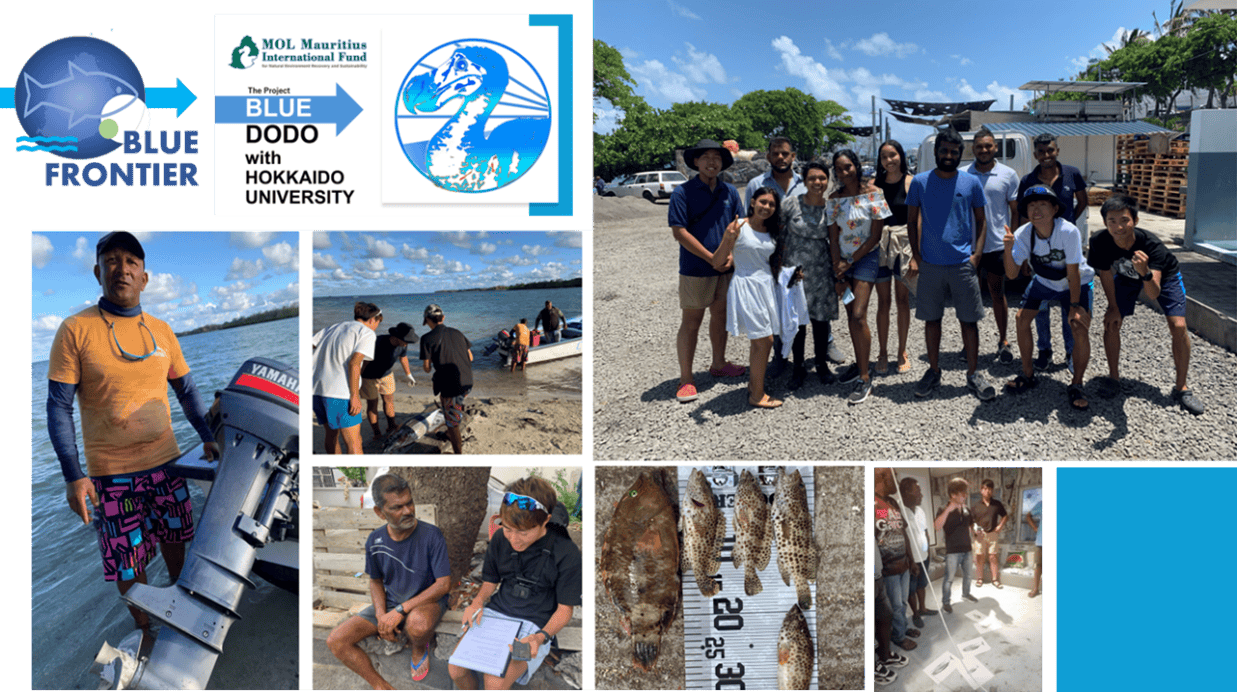
Collaboration with the MOL Mauritius International Fund on the Blue Economy
Hokkaido University, supported by the MOL Mauritius International Fund for Natural Environment Recovery and Sustainability in Japan, a non-profit international foundation established to promote environmental protection and community development, collaborates with the Government of Mauritius, local fishers, tourism sectors and educational stakeholders including members of secondary schools and faculty members of the University of Mauritius to promote educational and outreach activities that support marine ecosystem restoration and sustainable coastal resource management based on fisheries and aquatic sciences. Through the active participation of local communities and various generations, these efforts advance the formation of sustainable socio-economy based on a harmony with dynamic coastal environments and contribute to enhancing resilience to climate change.
Learn more (External Site)
Collaboration with the MOL Mauritius International Fund on the Blue Economy
-
Environmental Conservation and Climate Change Engagement with Citizens
Hokkaido University participates in the programmes of Earthwatch Japan, a certified non-profit organisation, in collaboration with universities, research institutions, private-sector partners and general incorporated associations.
The university conducts citizen-participatory research such as surveys of fish distribution and biodiversity in coastal areas across Japan using environmental DNA. This initiative has also proven effective as an educational approach that fosters public engagement with science and promotes the creation of a sustainable society. Through these activities, the university contributes to environmental education and to enhancing understanding and adaptive capacity regarding climate change.
Learn more (External Site)
-
In October 2024, the university developed its first comprehensive GHG inventory based on the globally recognised GHG Protocol (established by WRI and WBCSD). By classifying emissions into Scope 1, 2, and 3 across seven greenhouse gases, the university ensures accurate assessment and accountability, reinforcing its responsibility in advancing adaptation and carbon neutrality.
-
Hokkaido University participated in the CDP Climate Change Questionnaire 2024, achieving a “B” score (Management Level). Since FY2022, it has been the first Japanese national university to continuously respond, showcasing commitment to adaptation and carbon neutrality in cooperation with an international NGO.
Impact
Through educational outreach, citizen-engaged research, and internationally aligned sustainability assessments, Hokkaido University deepens climate adaptation literacy across society. By collaborating with NGOs and adopting global frameworks, the university ensures wide participation and knowledge transfer, fostering new climate leaders and innovative adaptation strategies. Its commitment demonstrates leadership in advancing resilience and sustainable development through education, research, and community partnerships.
Commitment to Carbon Neutral University
13.4.1: Commitment to carbon neutral university
Hokkaido University has committed to achieving carbon neutrality by 2050, in line with Japan’s national greenhouse gas reduction targets, as stated in the Hokkaido University Sustainability Declaration (2024). The declaration explicitly affirms that the university will “achieve the national target,” which requires a 51% reduction by FY2030 (compared to FY2013 levels) and net-zero emissions by 2050.
The university discloses annual GHG emissions data, covering Scope 1, Scope 2, and Scope 3, in its publicly accessible Hokkaido University GHG Emissions Repository. Governance of this transition is led by the President of Hokkaido University and implemented through the Institute for the Advancement of Sustainability which established a dedicated Carbon Neutral Promotion Division in 2024.
Through these commitments and actions, Hokkaido University demonstrates a clear institutional pathway toward carbon neutrality by 2050, in contribution to SDG Target 13.2.